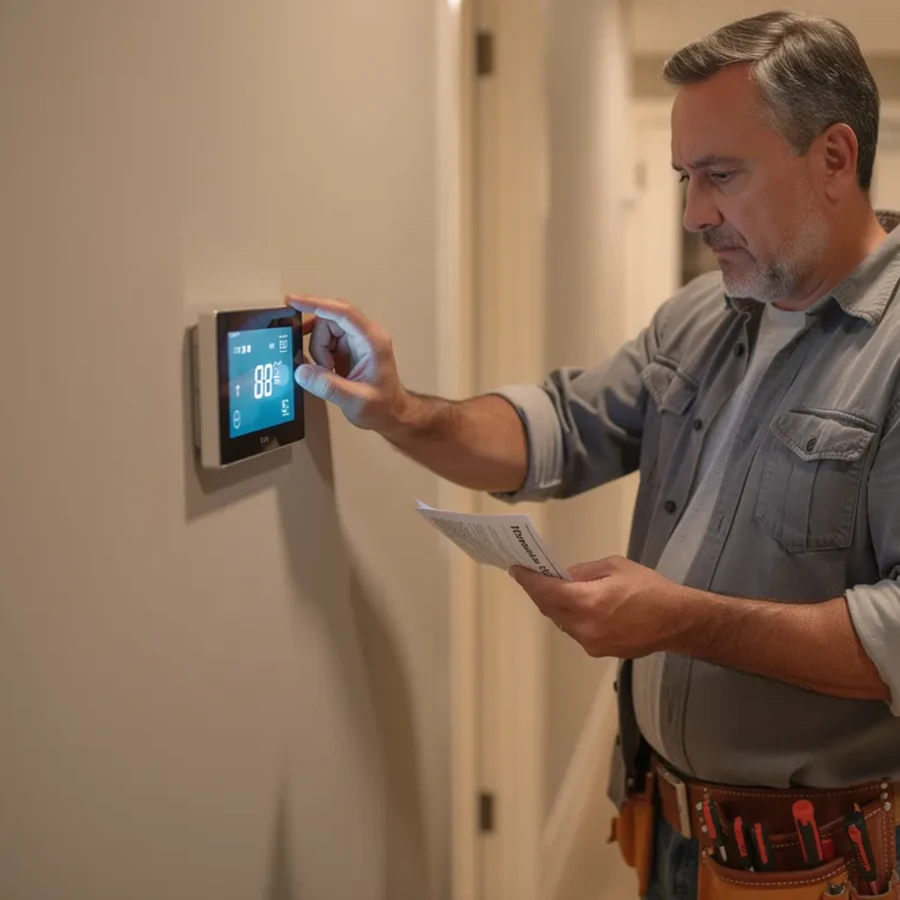
If you are a homeowner in Oklahoma, you already know what it means to face extreme weather. From scorching summers that push temperatures past 100 degrees to ice storms that arrive without much warning, your heating and cooling system is not optional — it is essential.
Yet many homeowners begin the process of replacing or installing a new HVAC system without a realistic picture of what it will cost, and that gap leads to budget surprises, rushed decisions, and systems that do not perform as expected.
This HVAC installation cost guide gives you a clear, honest, and detailed look at what you can expect to pay for HVAC installation in 2026. Whether you are replacing an aging unit, upgrading to a more energy-efficient system, or building new construction, understanding the cost data before you call a contractor puts you in a much stronger position. Heritage Services has worked with Oklahoma homeowners for years, and we have seen firsthand how a well-informed homeowner gets a better outcome — both in terms of pricing and long-term comfort.
Understanding Your HVAC Installation Quote

Before you review a single estimate, it helps to understand what goes into that number. HVAC installation costs are not arbitrary. They reflect real variables: the equipment being installed, the complexity of the labor involved, and the condition of your existing ductwork or the need for new ductwork.
When you receive a quote, it should break down clearly across three primary cost layers.
The Three Primary Cost Layers
Equipment Costs
This is the price of the actual HVAC equipment itself — the outdoor unit, the air handler or furnace, the coil, and any accessories such as a smart thermostat or air purifier. Equipment costs vary significantly based on system type, brand, efficiency rating, and system size. Higher efficiency equipment, such as variable speed units or two-stage systems, will carry a higher upfront cost but often deliver lower monthly energy bills over the life of the system.
Labor Costs and Permit Fees
Labor costs cover the installation process: removing your old system, connecting refrigerant lines, wiring, and verifying proper airflow throughout your home. In Oklahoma, labor for a standard HVAC replacement typically runs between $1,500 and $3,500, depending on installation complexity. Permits are usually required for any new HVAC installation in Oklahoma and are commonly included in your contractor’s quote. Always confirm this before signing.
Ductwork Infrastructure
Many homeowners are surprised to learn that existing ductwork can significantly change the price of a new HVAC installation. If your existing ducts are leaking, improperly sized, or deteriorating, your contractor may recommend ductwork installation or repairs before your new system goes in. Failing to address this step leads to poor airflow, higher energy bills, and a system that cannot maintain consistent cool or warm air throughout the home.
Average HVAC System Costs by Type
Understanding what different HVAC systems cost helps you set expectations before any contractor walks through your door. The table below gives you a realistic range for the most common system types in Oklahoma homes in 2026. These figures include both equipment and installation costs, but do not include ductwork work if your existing duct system needs significant repair or replacement.
| System Type | Average Installed Cost (2026) | Best For |
|---|---|---|
| Central Air Conditioner Only | $3,800 to $7,500 | Homes with an existing furnace and duct system |
| Gas Furnace Only | $2,500 to $5,500 | Replacement heat in homes with central air |
| Split System (AC + Gas Furnace) | $6,000 to $13,000 | Full system replacement in most Oklahoma homes |
| Air Source Heat Pump | $5,500 to $12,000 | Homes wanting one system for heating and cooling |
| Ductless Mini Split System | $3,000 to $10,000 | Additions, garages, or homes without existing ducts |
| Geothermal Heat Pump | $15,000 to $30,000+ | Long-term efficiency investment |
These are average price ranges and will shift based on home size, system tonnage, brand, and efficiency rating. Always get at least three quotes from licensed HVAC contractors before making a decision.
Central AC vs. Ductless Mini-Splits
A central air conditioning system remains the most common choice for Oklahoma homeowners who already have a functioning duct system. Central AC works by circulating cooled air through the existing ducts in your home, delivering consistent cooling to every room. The average cost to replace a central air conditioner in Oklahoma falls between $3,800 and $7,500 installed, depending on the system size and equipment efficiency.
Ductless mini split systems take a different approach. Rather than relying on a duct system, these units use individual air handlers mounted inside each room and connect to an outdoor compressor. The AC unit cost for a single-zone ductless mini split starts around $3,000 installed and can climb to $10,000 or more for multi-zone setups. Mini splits are ideal for home additions, converted spaces like garages or sunrooms, or any area where running new ductwork would be prohibitively expensive. They are also among the more energy-efficient options available, with many models carrying strong seasonal energy efficiency ratios (SEER) ratings.
Furnaces and Heat Pumps
Oklahoma winters require a reliable heating system, and homeowners typically choose between a gas furnace, an electric furnace, or a heat pump.
A gas furnace remains the most popular heating system in Oklahoma due to the low cost of natural gas and the strong heating output these systems deliver. Gas furnaces are rated by annual fuel utilization efficiency (AFUE), which measures how much of the fuel consumed is converted to usable heat. Modern high-efficiency gas furnaces carry AFUE ratings of 90% or higher. Furnace cost for a new gas furnace installation in Oklahoma ranges from $2,500 to $5,500 fully installed, depending on the efficiency rating and brand.
An electric furnace is generally cheaper to purchase but more expensive to operate, given electricity rates. These systems work well in mild climates but can drive up utility bills during the coldest Oklahoma months.
Heat pump installation cost in Oklahoma typically falls between $5,500 and $12,000 for an air source heat pump. Heat pumps function as both a heating system and a cooling system, moving heat rather than generating it. In heating mode, an air source heat pump extracts heat from outdoor air and transfers it inside. In cooling mode, the process reverses. The efficiency of heat pumps in heating mode is measured by the heating seasonal performance factor (HSPF), and in cooling mode by the seasonal energy efficiency ratio (SEER). Heat pump cost has come down in recent years as technology has improved, making them an increasingly attractive option for Oklahoma homeowners who want a single system to handle both heating and cooling.
Geothermal System Considerations
Geothermal heat pumps represent the most efficient and highest-performing heating and cooling technology available. Rather than exchanging heat with outdoor air like an air source heat pump, a geothermal heat pump uses the stable temperature of the ground to deliver consistent efficiency regardless of outdoor conditions. Installed costs range from $15,000 to over $30,000, putting geothermal out of reach for most homeowners as a straightforward replacement. However, federal tax credits and the long-term savings on energy bills can make geothermal a smart investment over a 15 to 20-year horizon, particularly for homeowners who plan to stay in their home long-term.
Key Factors Affecting Your Total Price
The ranges above give you a starting point, but your actual HVAC installation costs will depend on several specific factors. Understanding these helps you evaluate quotes accurately and avoid being surprised by additional charges.
Home Size and System Tonnage

One of the most important variables in your installation cost is the system size, measured in tons. HVAC systems are sized in tons, where one ton equals 12,000 British thermal units (BTUs) of cooling or heating capacity per hour. A properly sized system is critical — an undersized system runs constantly and struggles to maintain comfortable temperatures, while an oversized system cycles on and off too quickly and leads to poor humidity control and higher wear on components.
A licensed HVAC contractor should perform a load calculation before recommending system size. This calculation accounts for your home’s square footage, ceiling height, insulation levels, window placement, and local climate. As a general baseline, Oklahoma homes typically require approximately one ton of capacity for every 400 to 600 square feet, though this varies based on construction quality and sun exposure. Larger systems carry higher equipment costs, so proper sizing matters for both performance and budget.
| Home Size | Typical System Size | Estimated Equipment Cost |
|---|---|---|
| Under 1,000 sq ft | 1.5 to 2 tons | Lower range |
| 1,000 to 1,500 sq ft | 2 to 2.5 tons | Mid-lower range |
| 1,500 to 2,200 sq ft | 3 tons | Mid range |
| 2,200 to 3,000 sq ft | 3.5 to 4 tons | Mid-upper range |
| Over 3,000 sq ft | 4 to 5+ tons | Higher range |
Labor Complexity and Ductwork Requirements
Labor costs do not exist in a vacuum. They reflect the actual difficulty of the installation. A straightforward like-for-like HVAC replacement — swapping out an old air conditioner for a new one in the same location — is the least expensive installation scenario. New HVAC installation in a home that has never had central air, or installation that requires running new electrical circuits to support modern equipment, costs more.
Ductwork installation is often the largest unexpected expense in an HVAC project. If your home has older electrical systems or ductwork that was installed decades ago, your contractor may identify serious deficiencies during the assessment. New ductwork installation in a home that previously lacked it can add $3,000 to $10,000 or more to your total project cost. In contrast, if your existing ductwork is in good condition and properly sized for the new system, you may only need minor repairs or sealing, which is far less expensive.
Variable speed units are worth understanding in this context as well. These systems modulate their output rather than simply turning on and off at full capacity. They tend to require more precise ductwork design to ensure proper airflow, and their installation may involve additional commissioning time, which can add to labor costs. However, the efficiency gains and comfort improvements from variable speed units often justify the higher installation complexity.
How to Get Fair Quotes from HVAC Contractors
Getting accurate quotes is as important as understanding cost ranges. The wrong contractor can cost you thousands more than necessary — either upfront or through poor installation that reduces system efficiency and shortens equipment life.
Here is what to do when gathering quotes:
- Get at least three written quotes from licensed, insured HVAC contractors in your area.
- Ask each contractor to perform a load calculation before recommending system size.
- Request itemized quotes that separate equipment cost, labor costs, permit fees, and any ductwork work.
- Confirm that the quote includes all permits required for your jurisdiction.
- Ask about manufacturer warranties and any labor warranty the contractor offers.
- Verify that the contractor is licensed in Oklahoma and check their reviews through the Better Business Bureau or Google.
Red Flags in Low-Ball Estimates
A quote that is dramatically lower than others you have received deserves scrutiny. Some contractors offer low initial estimates and then add costs once the project begins. Others cut corners on installation that are not visible until the system fails prematurely. Watch for these warning signs:
- No load calculation performed before recommending system size
- Quote given over the phone without an in-home assessment
- No permit was mentioned or included in the scope of work
- Pressure to sign quickly to “lock in a price.”
- No written breakdown of equipment and labor
- An equipment brand you cannot find information on or that is not recognized by major industry organizations
- Skipping the assessment of existing ductwork entirely
A properly installed system on a slightly higher budget almost always outperforms a poorly installed system at a lower price. This is especially true in Oklahoma, where extreme weather means your system works hard for many months of the year.
Frequently Asked Questions About HVAC Installation
How long does HVAC installation take?
A standard HVAC replacement — such as swapping out an existing central air conditioner and furnace — typically takes one full day for an experienced crew. More complex installations involving new ductwork installation, new electrical work, or custom configurations can take two to three days or longer. Your contractor should give you a realistic timeline as part of your quote.
Does a new system increase home value?
Yes, a new HVAC system can meaningfully increase the perceived and appraised value of your home. Buyers in Oklahoma are keenly aware of heating and cooling costs, and a newly installed energy-efficient system is a genuine selling point. Appraisers may account for a new system in their assessment, particularly if the previous system was at the end of its useful life. While you are unlikely to recoup 100% of the installation cost in added value, newer systems do support faster sales and stronger offers.
What permits are required for a new HVAC system?
In Oklahoma, most municipalities and counties require a mechanical permit for HVAC installation. Some jurisdictions also require electrical permits when new wiring is part of the scope. Your HVAC contractor should pull all required permits before beginning work. If a contractor suggests skipping permits to save money, walk away. Unpermitted work can create serious problems when you sell your home and may void manufacturer warranties.
Can I finance my HVAC installation?
Yes. Many HVAC contractors, including Heritage Services, offer financing options that allow you to spread the higher upfront cost of a new system over time. Manufacturers also frequently offer promotional financing through authorized dealers. In addition, some utility companies in Oklahoma provide rebate programs for qualifying energy efficient equipment, which can reduce your effective out-of-pocket cost. Ask your contractor about available rebates and financing at the time of your quote.
What is the difference between SEER and AFUE ratings?
The seasonal energy efficiency ratio (SEER) measures cooling efficiency for air conditioners and heat pumps. A higher SEER means the equipment uses less electricity to deliver the same amount of cooling. The annual fuel utilization efficiency (AFUE) measures heating efficiency for furnaces. A gas furnace with a 96% AFUE converts 96% of the fuel it consumes into usable heat. The heating seasonal performance factor (HSPF) is the efficiency rating used specifically for heat pumps in heating mode. All of these ratings affect your monthly energy bills and long-term savings — higher efficiency ratings generally mean lower utility bills over time.
When should I replace rather than repair my system?
A general rule is the 5,000 rule: multiply the age of the system by the estimated repair cost. If the result exceeds $5,000, replacement is often the more economical choice. Systems older than 12 to 15 years that require significant repairs are also good candidates for replacement, particularly if the equipment uses older refrigerants that are being phased out. A new system will also benefit from improved efficiency ratings that older equipment simply cannot match.
How do I know what system size I need?
System capacity should always be determined by a proper load calculation, sometimes called a Manual J calculation. This goes beyond simple square footage and accounts for insulation, window area, orientation, ceiling height, and local climate data. An oversized system may feel powerful, but will cycle on and off too rapidly, failing to remove enough humidity and driving up HVAC replacement costs prematurely. A properly sized system runs in longer cycles, maintains better indoor air quality, and delivers more consistent comfort.
Contact Heritage Services for the Next Steps

Planning for HVAC installation is one of the more significant home investments you will make as an Oklahoma homeowner. The cost of a new HVAC system spans a wide range depending on system type, home size, installation complexity, and the condition of your existing ductwork. A central air conditioner replacement might cost $4,000 to $7,500, while a full split system or heat pump installation could reach $10,000 to $13,000 or beyond when ductwork improvements are part of the scope.
The most important step you can take right now is to schedule a professional audit with a licensed HVAC contractor who will assess your home properly before recommending any equipment. A thorough in-home assessment looks at your existing duct system, evaluates system size requirements, checks for any issues with older electrical systems, and identifies opportunities to improve efficiency and comfort at a reasonable cost.
At Heritage Services, we provide honest assessments, transparent quotes, and installations that are done right the first time. Our team understands Oklahoma’s climate demands and helps homeowners select properly sized, energy-efficient systems that deliver lasting comfort without hidden costs. Whether you are considering a gas furnace upgrade, a new heat pump installation, or a complete central air conditioning system replacement, we are ready to help you make the right decision for your home and your budget.
Contact Heritage Services today to schedule your assessment and take the guesswork out of your HVAC installation.
Heritage Services proudly serves Oklahoma City and surrounding communities with expert plumbing, heating, and cooling solutions. Call us at 405-348-5555 or visit heritageservicesok.com to schedule your consultation.