Keeping your home warm during the colder weather months starts long before temperatures drop. A complete furnace maintenance checklist gives homeowners a clear path to protecting their heating system, lowering energy bills, and avoiding costly repairs that seem to always show up at the worst time.
Whether you have a gas furnace or a heat pump, consistent maintenance is the difference between a system that runs reliably all winter and one that leaves you scrambling for emergency repairs.
This blog walks you through everything you need to know about annual furnace maintenance, from the steps you can handle yourself to the professional maintenance tasks best left to a licensed HVAC contractor.
Why Regular Furnace Maintenance Matters
Most furnaces are built to last 15 to 20 years, but only when they receive regular maintenance. Skipping routine maintenance does not just shorten the life of your equipment. It also drives up your energy costs, reduces indoor air quality, and puts your family at risk from carbon monoxide exposure.
A well-maintained gas furnace runs at peak efficiency, which means more warm air reaches your living spaces and less wasted fuel. Homeowners who schedule annual furnace maintenance typically see measurable improvements in system efficiency and a noticeable drop in monthly energy bills. The cost of a furnace tune-up is a fraction of what major repairs or a full replacement would run.
Regular furnace maintenance also protects your warranty. Many manufacturers require documented professional service to keep warranty coverage intact, so skipping annual maintenance could leave you holding the bill for expensive repairs that would otherwise be covered.
Annual Furnace Maintenance Checklist: Start Before Heating Season Begins
The best time to work through your annual furnace maintenance checklist is late summer or early fall, before heating season begins and HVAC professionals get fully booked. Here is a full breakdown of what to inspect, clean, and test.
1. Replace or Inspect the Air Filter
The furnace filter is the first line of defense for your heating system. A dirty filter restricts airflow, forces the blower motor to work harder, reduces heating output, and allows dust and debris to settle on internal furnace components. Over time, a dirty filter can cause the system to overheat and trigger a safety shutoff.
Check your furnace filter every month during heating season and replace it every one to three months depending on your household. Homes with pets or allergy sufferers should lean toward monthly changes. When in doubt, hold the filter up to a light. If you cannot see through it, replace it. A clean filter is one of the simplest ways to keep your heating system running efficiently without spending a dime on professional service.
2. Inspect the Heat Exchanger
The heat exchanger is one of the most critical and most overlooked furnace components. Its job is to transfer heat from the combustion chamber to the air circulating through your home. Cracks or damage to the heat exchanger can allow carbon monoxide to leak into your living spaces, which is a serious safety hazard.
Visually inspect the heat exchanger for signs of rust, corrosion, or visible cracks. If you notice anything unusual, stop using the furnace and call an HVAC professional immediately. This is not a repair for a homeowner to attempt. A licensed HVAC contractor has the tools to inspect heat exchanger integrity properly and safely.
3. Check Carbon Monoxide Detectors
While you are focused on your heating system, take a few minutes to test every carbon monoxide detector in your home. Replace batteries annually and verify that each unit is functioning properly. Carbon monoxide is colorless and odorless, and a cracked heat exchanger or faulty combustion chamber can release dangerous levels without any warning. Working carbon monoxide detectors are a non-negotiable part of safe furnace operation.
4. Clean the Blower Motor and Fan Blades
The blower motor and fan blades circulate warm air from the furnace through your air ducts and into your living spaces. Dust buildup on the fan blades throws the blower motor out of balance, reduces airflow, and causes premature wear on the motor itself.
Turn off the power to the furnace at the breaker before accessing the blower assembly. Remove the blower unit carefully and use a soft brush and vacuum to remove dust from the fan blades and motor housing. While you have the unit out, inspect the fan switch and check for any loose connections on the wiring. Reinstall everything carefully before restoring power.
5. Inspect the Flame Sensor and Pilot Light System
The flame sensor tells your furnace whether the burner has ignited. When it is coated with residue, it cannot do its job, and the furnace shuts down even when the gas valve is open and everything else is working correctly. Carefully remove the flame sensor and clean it with fine steel wool or a dry cloth, then reinstall it.
If your furnace uses an older pilot light system rather than electronic ignition, inspect the pilot light during your routine maintenance. A steady blue flame is a good sign. A yellow or flickering pilot light may indicate a ventilation issue or dirty burners that need attention.
6. Inspect the Flue Pipe and Venting
The flue pipe carries combustion gases out of your home. Check it for rust, corrosion, holes, or loose connections. Any gaps in the flue pipe can allow carbon monoxide and other combustion byproducts to enter your living area. Make sure the flue pipe slopes correctly toward the exterior exhaust point and that nothing is blocking the vent outside, including bird nests, leaves, or ice buildup in colder weather.
7. Test Thermostat Settings and Operation
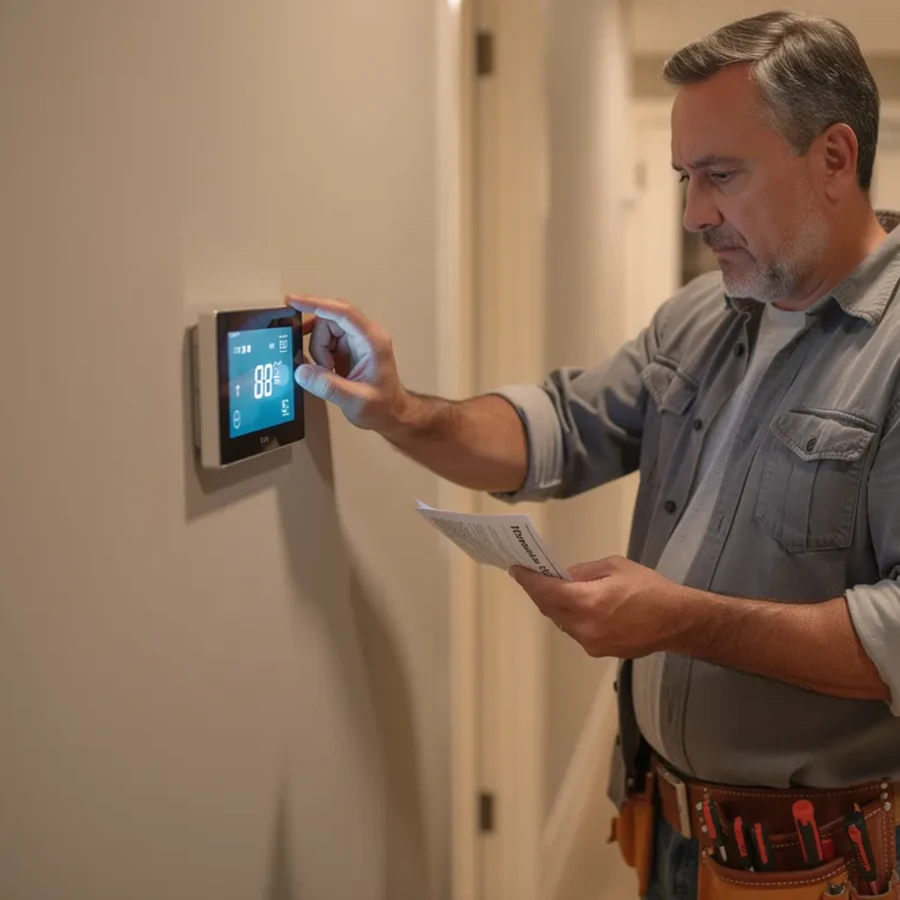
Switch your thermostat to heating mode and run a quick check of the thermostat operation to confirm the system responds correctly. Set the temperature above your current room temperature and listen for the furnace to cycle on within a few seconds. Warm air should begin flowing from your vents shortly after. If the system does not respond, check the batteries in your thermostat and verify the fan switch is set to auto rather than on.
Also, review your thermostat settings for the season. Program setback temperatures for overnight and away hours to reduce energy costs without sacrificing comfort.
8. Examine Electrical Connections
Loose connections inside your HVAC system are a fire and system failure risk. With the power off, carefully inspect visible electrical connections for signs of burning, corrosion, or loose wiring. Tighten any loose connections you find. If you see burned wiring or components that appear damaged, do not attempt repairs yourself. Call an HVAC professional to assess the damage before running the system again.
9. Inspect the Return Air Duct and Air Ducts
Walk through your home and check that all supply and return vents are open and unobstructed. Furniture, rugs, and curtains placed over vents restrict airflow and force your heating system to work harder than necessary. Check your return air duct for visible damage or disconnected sections, which can pull unconditioned air into the system and reduce efficiency.
If your home has experienced unusual dust levels or inconsistent heating from room to room, it may be time to have your air ducts professionally inspected for leaks or buildup. Leaky air ducts can waste a significant portion of your heating output before warm air ever reaches the living spaces it is meant to heat.
10. Check Gas Connections and Gas Lines
Do a visual inspection of accessible gas connections and gas lines leading to your furnace. Look for signs of corrosion or damage, and pay attention to any smell of natural gas near the unit. If you detect even a faint gas odor, leave the house immediately, avoid using any electrical switches, and call your gas company and an HVAC professional from outside the home. Gas leaks are a serious emergency that requires immediate professional attention.
Never attempt to repair gas connections yourself. A qualified HVAC contractor or gas technician has the training and equipment to inspect and repair gas valve connections safely and in accordance with the manufacturer’s specifications.
11. Clean the Combustion Chamber and Burners
Dirty burners reduce heating efficiency and cause incomplete combustion. Visually inspect the burners for carbon buildup, rust, or physical damage. Burner flames on a properly functioning gas furnace should burn blue and even. Yellow or uneven burner flames indicate a combustion problem that may require professional service.
Wipe down the interior of the combustion chamber and vacuum out any loose debris or soot. If you see heavy buildup or unusual residue, schedule a professional maintenance visit before running the system through the full heating season.
What a Professional Furnace Maintenance Service Includes

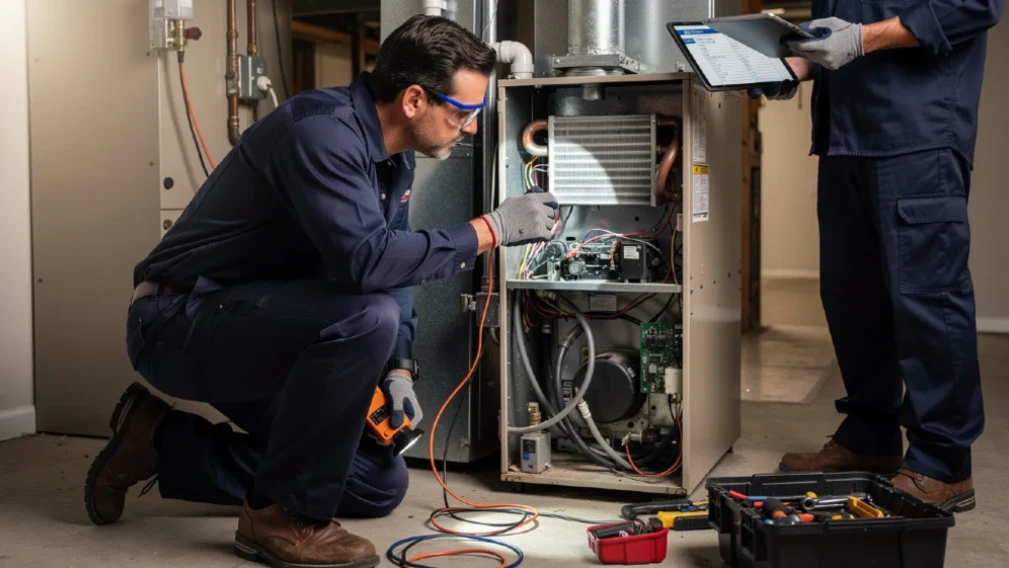
While the steps above represent solid routine maintenance any careful homeowner can manage, annual furnace maintenance service from a licensed HVAC company goes several steps further. A professional tune-up typically includes combustion analysis, gas pressure testing, heat exchanger inspection using specialized tools, temperature rise measurement, and a full review of all safety controls.
An HVAC professional will also check refrigerant levels if your system includes a cooling system component, lubricate moving parts, test the gas valve, and verify that your furnace is operating within the manufacturer’s specifications for safe and efficient operation. Scheduling professional maintenance annually catches issues that DIY inspections can miss, particularly cracks in the heat exchanger and problems with the combustion chamber that are not visible to the untrained eye.
For homeowners in the Oklahoma City area, Heritage Services offers experienced furnace maintenance service from licensed specialists who know what it takes to keep a gas furnace performing well through Oklahoma winters. Scheduling annual tune-ups with a trusted local HVAC company is the most reliable way to protect your investment, preserve your warranty, and ensure safe operation all season long.
Signs Your Furnace Needs Service Now
Do not wait for the full annual maintenance window if you notice any of these warning signs between scheduled visits:
Strange noises such as banging, rattling, or squealing coming from the furnace or air ducts are not normal and often point to mechanical issues with the blower motor, fan blades, or loose components inside the unit. Uneven heating from room to room, frequent cycling on and off, a sudden rise in energy bills without a change in usage habits, or visible yellow burner flames are all signals that your system needs attention from an HVAC professional before small problems turn into major repairs.
Any smell of gas near the furnace or throughout your home is an emergency. Do not attempt to investigate or run the furnace. Leave and call for help immediately.
Schedule Your Annual Furnace Tune-Up Today

Working through a complete annual furnace maintenance checklist before the heating season is one of the smartest things a homeowner can do for their comfort, safety, and budget. Consistent maintenance keeps your gas furnace or heat pump running efficiently, protects your family from carbon monoxide risks, and prevents costly emergency repairs at the worst possible time.
If you are ready to schedule professional heating maintenance from a team you can trust, Heritage Services has been serving the Oklahoma City metro since 1967. Our licensed HVAC professionals deliver fast, reliable furnace maintenance service designed to keep your heating system running efficiently all season long. Contact us today to book your annual tune-ups and head into winter with confidence.